Showing posts with label california table. Show all posts

Friday, November 13, 2009

Sunday Supper: Navarro Wine Dinner!


Navarro Vineyard Wine Dinner!
Sunday, 11/22/09, 5pm
Mercedes Hair of the Dog Cantina
653 Commercial St, SF 94111

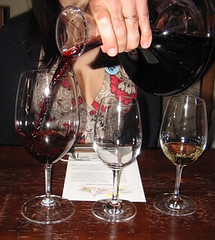
California Table welcomes Sarah Bennet of Navarro Vineyards for this month's Sunday Supper! So you guessed right~ a wine dinner centered around Navarro's wines. Out of their 18 wines available right now, we're pairing the perfect grapes to this dinner. Local wines, local food, local people. What more can you ask for?

The price of this prix-fixe dinner is $85 which includes 2 beginning appetizers, the 5-course meal, and of course, the wine pairing. A cash bar will also be available for you to purchase wine a la carte and also to buy bottles for the upcoming holidays! Check out the menu below and start blocking off November 22nd to enjoy this evening of gaiety!

Starters

Crispy Red Kuri Squash "Raviolis"
Preserved Meyer Lemon Brown Butter

Gougeres

Family Style Dinner

Butter Lettuce Salad in a Tarragon-Créme Fraiche Dressing
Breadcrumbs, Local Walnuts, Sieved Egg

Risotto with Crescenza & Wild Mushrooms
Cooked in a Parmesan Broth

Lavender & Honey-Rubbed Leg of Lamb
Sunchoke Pure, Grilled Chicories

Lamb Chopper Sheep's Cheese
Fig Puré, Black Pepper Flatbread

Dessert

Pine Nut Tart
House-Made Baked Apple Ice Cream

*Vegetarian option available

Saturday, January 12, 2008

Starting off the new year with new visions!

Hi my fellow urban dwellers and foodies alike,

The new year is bringing new promises for upcoming cooking classes and demonstrations. California Table now has a kitchen space available for larger groups. Here are just some of the classes available:

Cheese Class w/ Wine Option (Wine Expert Brian Havens)

While there are many ways to classify and categorize cheese, different cheeses are, at their core, intimately tied to their places of origin. One of the best ways to survey all of the different types of cheeses and learn about their similarities and differences is by looking to the great cheese making countries and regions of the world as a guidepost. These classes offer an opportunity to taste all the best in artisan cheese – from fresh to aged, cow to sheep to goat, light and grassy to pungent and earthy – covering Cheeses of California foremost, France, Italy, and Cheeses of Spain

Food/Ingredient of the Month

Northern California explodes with new flavors and super-star ingredients multiple times per season. Join us in these classes to celebrate the changing of the season and the foods that accompany it. We will be utilizing the main ingredietn in 3-4 dishes.

Sauces and Stocks Class

As any professional chef knows the key to an amazing sauce or dish is in the stock. You will learn how fast and easy it is to make pristine stocks and how to utilize them in almost any dish.

Sauces are the perfect finishers for any dish- vegetable or protein. Learn some of the classics in this class and how to create beautiful sauces from your homemade stocks.

Holiday Foods

Everyone needs a helping hand when it comes to entertaining family and loved ones during the holidays. You'll benefit from our tips and techniques for creating an unforgettable feast. Discover timeless recipes and a practical approach to cooking while you prepare and sample traditional holiday flavors and fresh contemporary twists on old favorites.


• For our corporate clients, we offer 'Corporate Team Building' cooking classes and competitions:

• Your group will be divided into teams in a heated and timed challenge.
• This interactive cooking event offers a fun spirited competition, complete with judging and an award ceremony.
• The winning team wins a prize based on presentation, teamwork, and of course taste.

Special diets:
We offer Gluten-free Cooking, Vegan/Vegetarian Cooking, Dairy-free cooking

Introduction to Wine

There are many misconceptions and myths surrounding the subject of wine. Ultimately, though, it is nothing but a beverage enjoyed and celebrated around the world and has been for thousands of years. It only takes a handful of purchases from the corner liquor store to come to some conclusions about which wines you like and which are better left on the shelf.

The easy part is deciding if you like a wine or not. The difficult part is understanding why. What do you like about it, and how do you communicate your feelings? Is it light or full bodied? Tannic or smooth and supple? What are tannins anyway? Is it fruity, sweet, dry... ? Do fruity and sweet mean the same thing? You will conquer all of these techniques and overcome wine intimidation in our 2-hour class in either your own home or one of our locations.

Wine is most definitely a subject that the more you learn, the more you want to continue discovering. With this class, an entire new world will be yours for the taking.


Catering: Along with personal cooking, California Table offers our same core promise in utilizing local, organic foods for catering, as well. Whether you have a business holiday party or are hosting an event in your home, we have expert staff that can carry out any task. Name your theme and we have your party.

Of course while this is all going on we are still continuing one-on-one and small group cooking classes in your kitchens practicing California Table's core values utilizing locally fresh and sustainable organic agriculture.


Here's a cute youtube video, "Store Wars", about our fight on organic in supermarkets.

Tuesday, November 6, 2007

Lawsuit Against Dole, Chiquita, & Del Monte for Poisoning Banana Workers!

Just when we thought we understood everything about bananas... we love'em, they're one of the "safest" fruits to eat when not organic (because of their thick skin screening out 'most' of the poisons in pesticides), and they're the easiest fruit/vegetable to digest. This fruit comes in the handy when we need to grab something to go, or for athletes who need quick sugars and potassium. Bananas have been one of my favorite foods since I can remember eating food.

Education on conventional foods has taught us about the negative environmental factors. We've also learned that conventional foods carry some of the toxins they’re sprayed with. Even after scrubbing down an apple, or plum, or carrot... the toxin is still inside waiting to be eaten by the foolish human who buys it.

What we haven't learned or put too much thought into are the effects pesticides have on the pickers who harvest them. These workers have their hands on, in, around these toxins all day, everyday.

Organic Consumers Association states “thousands of banana pickers in Costa Rica have filed a lawsuit in Los Angeles against two chemical companies and three major U.S. fresh produce companies, claiming exposure to a toxic pesticide caused a range of reproductive disorders.” The company is accused of using a pesticide that was banned in the U.S. in 1979 called dibromochloropropane. The chemical was used to kill microscopic worms on the roots of the banana plants. Possible side effects of this pesticide when inhaled or absorbed by the skin of are sterility, testicular atrophy, miscarriages, birth defects, liver damage and cancer.

The workers stated the companies conducted a "settlement campaign". The plaintiffs who were exposed to the pesticide were induced to sign releases freeing the companies of liability. Organic Consumers Association says the companies allegedly offered to settle the claims for sterility for $2,900 to $6,500 a piece as long as the workers did not involve their own lawyers says . CBS News says that according to the lawsuit manufacturers of the pesticide, "actively suppressed information about DBCP's reproductive toxicity".

Luckily this was finally all brought to the surface and these workers are getting paid for their losses. Los Angeles jury awarded $3.3 million to six workers on Monday. Still, nothing will ever repay the loss of sterility or miscarriages. I hope we've all learned more of a lesson in how important buying organic. Not only are we saving ourselves and the environment by, but we are also saving the innocent and hard-working farmers.

Monday, October 29, 2007

Is Fish Farming Our Future?

Sustainability. Isn't that what we're all shooting for? Defined as a process or state that can be maintained at a certain level indefinitely. Indefinitely means forever or for a long time, no end defined. In advocating sustainable food we are attempting to create and support environmental stewardship, farm profitability, and prosperous farming communities. In doing so we are ensuring the future of our healthy food will be there when we need it. Sounds logical, right? But for some reason, not everyone is catching on.

So what do we do about the sustainability of our oceans and it’s living organisms? I mean, we continue to pollute it with oil spills, trash, toxic waste, etc, let alone over fishing it to the point that we are actually running out of fish! A 2003 study in the journal, Nature, reported that up to 90 percent of the stocks of the ocean’s major predators (Atlantic cod and blue fin tuna) have been wiped out. NYTimes


How has it gotten to this point? Tuna fish was once considered “Chicken of the Sea” because it was so plentiful and in high demand as the chickens running amuck our dry land today. Oh, how these days have passed. If the whole world stopped eating fish for two years, maybe even just one, there would be a chance our fish populations could possibly bounce back. The chances of that happening? Slim to none. Instead of fisheries slowing down their production, they’re going to whatever extremes necessary to make their money now, before there’s nothing left at all.

Commercial fishing, once viewed as a proud job, was passed along family businesses from generation to generation. Those days are coming to an end because of the bad rap the fishing industry has created from pollution and bycatch (unwanted fish and animals caught). Let's look at some of the more well-known techniques; “trolling”, “longlining”, “hook and line caught”, and of course the now taboo method of “dredging”. The latter, dredging, is when farmers drag a heavy frame with an attached mesh bag (the dredge) along the seafloor to catch bottom-dwelling shellfish. Some dredges have metal “teeth” along the base of the frame that act like a rake. Dredges cause significant habitat damage as they destroy all flora and fauna in its path and smooth out sandy and muddy bottom habitats, as well as catching bycatch. If you want to learn more about these issues, visit the Monterey Bay Aquarium site.

Longlining sometimes gets confused with “Hook and Line Caught”. But don’t be fooled by their similar names. Hook and Line is the old-fashioned and trusty way of using a single line with one or two hooks and bait. As each caught is made, its wound in where the fisherman can quickly release unwanted catch from their hooks, keeping what they’re after. There is no habitat damage and the possible bycatch are released. The other technique, longlining, is a fish line that can be 1 mile to 50 miles long and is pulled alongside the boat for hours. Sea turtles, birds, sharks, and other fish are accidentally caught, killed unnecessarily, and end up being pulled along side for hours at a time.

Farming, another taboo word could possibly be our temporary answer. If we can learn to harvest wild fish sustainably then we will have succeeded in something we have failed at on land: finding a balance with a naturally productive ecosystem. We first need to be able to differentiate salmon farming and it’s foul history from the new possible standards. Salmon farming has given rise to numerous controversial issues including what is being fed to these fish, how it’s transmitted to our bodies, what it’s doing to our economy, and how it’s polluting our natural waters. PCB (polychlorinated biphenyls, a toxin) is found in all fish, but when the farmed salmon are fed fish pellets (ground fish meal and oils made from fish) their whole life, their numbers of PCBs are much higher than wild salmon which only start to feed on other fish with PCB as they are mature adults. Before the wild salmon have grown large enough to feed on small fish, they feed on tiny crustaceans called krill. These crustaceans have naturally occurring pigments that give salmon their beautiful orange color. Farmed salmon never have the opportunity to feed on krill, only being fed fish meal their whole lives, so their natural color is an unattractive gray color. Who wants to eat gray salmon?? They are in turn fed artificial pigments inside their meal in order to turn their flesh orange. Kinda gross, no?


In What to Eat, author Marion Nestle goes into great detail about our fish farming problems. She explains that along with the pollution from the waste of the farmed salmon spilling into our waters and harming the wild life, the salmon often escape their pins entering the natural waters. They can then mate with other types of salmon, spawning mutant species. If their levels of PCBs are higher than normal already, then they're introducing more toxins into the waters to be eaten by other fish. And, in case you're curious, just a few of the terrible health conditions that result from extreme exposure to PCBs include skin problems, reproduction difficulty, mental and physical developmental delays, and behavior problems. Scientists are still uncertain to what the small amounts of PCB found in wild fish will do. Hmm.


There are fish farms out there that are attempting to make a difference in the farming industry. Kona Kampachi of Kona Blue for example, a cousin of the Japanese Hamachi, similar to Hawaii’s Amberjack, has been farmed a half mile off the coast of Hawaii for a few years now. Cages that are 200-250 feet under the water hold fish that are kept and fed until they're mature enough, and in high enough demand, to sell. Hatching actually begins on land from a stock of fish caught off the coast and brought into holding tanks until they’ve become acclimated enough to start spawning. The eggs are then carefully transferred to the on-land hatchery until hatched where they are fed plankton for three weeks. Then the fish are weaned on to pellet-feed, made from vegetable-based proteins, PCB and hormone-free fishmeal, and fish oil. They are then transferred to the open waters where strong currents keep the fish moving and happy with minimal environmental issues. If any fish do escape during the exchanges, there is no risk in harming other wild fish in the open waters because they are not genetically modified and these are their natural waters.

Offshore fish farming is still really new so there’s no track record yet on the environmental issues. Up to this point fish farming has been done incorrectly and created more harm than good. But there is such a thing as sustainable farming and I think it can be pulled off in the fish industry, as well. At this point I believe we should be open to this idea as our oceans are in critical times and in danger of being wiped clean. At least until our wildlife can make a come back. If we can farm turkeys on land for our massive consumptions during the silly holiday, "Thanksgiving", then we should be able to consider fish farming a safe means, as well.

Monday, October 22, 2007

Cooking the Perfect Beans!

With bean season here in our beautiful Northern California fall, let's make sure we cook them successfully and deliciously.
Cannelinis, Navys, Gigantes, Garbanzos, Limas, Cranberry, Favas, Lentils, Flageolet, Great Northern, Mung, Pinto, Kidney… There’s definitely a bean for everyone. No matter what variety and/or recipe, there are a few important bean factors to take into consideration.

Soaking the beans over night may reduce your total cooking time but it’s not absolutely necessary. I’ve been cooking beans straight from their packaging for the past 6 years and never had a problem. Though rumor has it, soaking your bean and changing the water a few times cuts down on the flatulence-producing enzymes. Hmm, this will be for you to try and found out.
The common bean is made up of 22% protein, 61% carbohydrate, and 2% fat making these little legumes an all-around bundle of health. And some of us may remember learning in grade school what a bean is comprised of; the inner cotyledon, the embryo, and the outer seed coat. Why am I bringing up these lost memories of science class? Because in order to understand how to cook a bean properly it’s best to know how it works. The cell walls of beans will soften more readily in alkaline solutions, not acidic or salty. One of the most common mistakes people make when cooking these little buggers is adding salt to the liquid in the beginning of the process. This is the biggest no-no! Never, no matter how long you cook them, their skins, or shells, will never soften past a snappy crunch. Even veteran chili makers know that adding uncooked beans straight into their acidic and salty sauces will not speed up the process and absorption of flavor, but result in beans that seem to be uncooked. They will feel done and creamy in the middle, but still have a lingering rawness in the outside shell. But then we run across the problem of having beans that aren’t seasoned enough, or at all. So where does the salt come into play?? The solution to this problem all comes with the timing in the salting.
70%-80% done is a general rule of thumb when to add salt. I lean more toward the 80% side. How do you know when your beans have reached this level of done-ness? You can either bite into the bean to test the rawness of the core, or you can break open the bean and look into the middle. When a bean still has time left it will have a little white dot in the middle showing you your hot liquid has not permeated it yet. The amount of salt for your recipe depends on how many beans you’re working with and how much liquid. I generally salt the liquid until it tastes like a salty soup when there’s 20% time left.
Speaking of the bean liquid, it contains most of the ingredients of a veggie stock, so I always triple the amount of water to bean ratio, saving the excess liquid for stock with added starch (from the beans) for soups and braises. I simply ladle the excess liquid off the top of the bean pot and poor it through a strainer to leave out any little bits.
One more tip to creating the perfect beans is adding in olive oil to your water in the beginning of the cooking process. This results in a more velvety texture in the bean and the broth will taste richer.

Bean Recipe: For 5 pounds of dry beans

1 Carrot, peeled
2 Ribs of celery
¼ Yellow onion
4 Sprigs of thyme
3-4 Smashed cloves of garlic
3 Tb. Extra Virgin Olive Oil

Salt to taste

For 5 pounds of beans, use a 4-6 quart pot. Place the beans in the pot along with the remaining ingredients (except the salt). Add enough water to cover the beans by 3-4 inches. Bring the water to a light boil and then reduce to a simmer. Depending on what type of bean you’ve decided to cook, total cooking time will vary. Try checking the status of your bean in 30-minute intervals. Remember. Don’t add the salt until the beans are 80% done or add uncooked beans into acidic sauces!

Friday, September 14, 2007

How to Choose a Knife Best For You:

(Check out the bottom to see a chart of knives and their details)


There are so many knives out there!! I mean, butcher knives, Japanese knives, chef’s knives (French knife), paring, slicing, filet, boning, bread, utility, steak… And not only for every purpose, but each knife also gives you the options of material, size, and composition. How is the everyday person with no culinary training supposed to know what to have in their kitchen? Easy. One of everything. Kidding, but if we all could, wouldn’t it be amazing? A tool for every purpose! Knives have been in our “kitchens” since Stone Age. My, how they’ve come a long way. At least now they have handles. But then what kind of handle to get?!

Let us start this discussion with the most common styles of knives out there, their purposes, and which one (two, three…) you should have in your kitchen. Below we will talk about the importance of different materials.
  • Boning knife: This knife used to remove bones from the flesh of meat like poultry, fish, and ham. It is a shorter knife with a somewhat flexible, curved blade.
  • Bread knife: No, this knife is not the all-purpose knife that I know many people like to think. I’ve seen it used for cutting tomatoes, cheese, vegetables, etc. I’m sure the reason for this is because they never appear to go dull, but this is because they rip and tear food. This is a longer knife, about ten inches long, which is good for sawing through bread crusts without dulling the blade, and cutting the bread without crushing it.
  • Paring knife: This knife has a short, sharp blade, used for peeling fruits, or making decorative garnishes out of fruits and vegetables.
  • Filet knife: A filet knife has a flexible, longer curved blade, and it is used for cutting meats and fish into thin filets.
  • Utility knife: A utility knife is somewhat smaller than a chef knife, about five to eight inches long. It’s used for cutting meats and cheeses.
  • Steak knife: These will usually come in a set. They’re perfect for cutting tough foods into manageable bites. They have short, often serrated, blades, and should only be used on the table.
  • Chef’s knife (French knife): This is the most common knife found in all kitchens. Not only because it’s been around the longest, but also because of its versatility and use for everyday tasks like slicing, chopping, and mincing many different kinds of foods. Santoku knives, which are a style of chef’s knives, feature scalloped edges, which are perfect for slicing foods that are softer, such as tomatoes, bread, and cakes.

A knife is your single most important and utilized kitchen tool. A sharp, well-kept, personally fitted knife, will keep you and your food safe. You’ll be slicing and carving, rather than smashing and tearing.
Next time you’re in a kitchen supply store, or online, you’ll know what the purpose of every knife is, but now to discuss what materials and composition you should be aware of.

The knife is composed of a blade, handle, and a tang:

  • Blades to consider are the conventional v-shaped blade that is sharpened from both angles, and the Japanese style blade that is only sharpened from one angle. V-shaped blades are more of a world standard because it was originally used in more countries and the realigning of the blade is an easier way to manage a constant sharpness. The Japanese style blade is very sharp, as well, but will stay sharp longer. This is ideal for cooks who do not want to regularly re-center the blade. This blade will need to be sharpened more to maintain ideal sharpness as a result.
  • The handle can be composed out of the same material as the blade, wood, or a hard, durable plastic. It’s important when shopping for knives that you pick one up and think about how it feels in your hand. The only difference in your options is your own opinion. Where the blade thickens to meet the handle is the shoulder. This keeps the knife from jamming into the bone of a chicken while cutting.
  • The tang is known as a blade's extension into the handle. It’s important to choose a knife that has a full tang, meaning the steel of the blade runs all the way through the handle of the knife. A full tang ensures strength, weight and balance. Most knives that have a full tang make it visible by fastening the handle on either side of the steel, leaving the steel visible on the top and bottom of the handle. Without a tang, the knife’s blade is only fasted on to the handle, keeping the majority of the weight in the front of the knife, and can potentially come unfastened.
Now, lets look at three basic materials used for making kitchen knives: steel, titanium, and ceramic.
  • Carbon Steel has been used for many years. These guys are tough and take less effort to acquire a better edge. However, these blades discolor when they come in contact with foods that are high in acid, such as tomatoes and citrus fruit. They must be given special care to avoid discoloration and rusting. You should wash and dry them thoroughly after use.
  • Unlike carbon steel, Stainless Steel blades do not discolor or rust. However, they are such a hard material, that even though they keep their edge longer, they don’t take sharpening well once they do go dull.
  • High Carbon Stainless Steel knives offer a combination of the best attributes of carbon steel and stainless steel blades. They have the toughness and ability to hold an edge and, like stainless steel blades, they do not discolor when coming in contact with acidic foods.
  • Titanium blades are made from a mold of titanium and carbides. When compared to steel, titanium is lighter, more wear resistant, and holds its edge longer. The titanium blade is more flexible working best for tasks like boning and filleting.
  • Ceramic blades are made of zirconium and aluminum oxide. Although they are much more delicate than steel knives, they tend to hold their edge up to 10 times longer! However, once the blades have dulled, they have to be sharpened by a professional sharpener.
So now that we know knives much more intimately, below is a chart I found on knives and what they’re made of from Kitchen Knife Buying Guide. These are the most common knife manufacturers you will find at your local kitchen supply store. This will make it easier for you to be prepared before your knife shopping and hopefully will help clear up any confusion I’ve created with my purge of information!


Knife Comparison Chart