Showing posts with label food. Show all posts

Friday, November 13, 2009

Sunday Supper: Navarro Wine Dinner!


Navarro Vineyard Wine Dinner!
Sunday, 11/22/09, 5pm
Mercedes Hair of the Dog Cantina
653 Commercial St, SF 94111

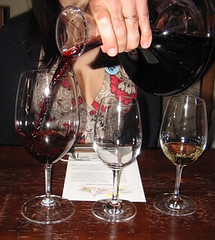
California Table welcomes Sarah Bennet of Navarro Vineyards for this month's Sunday Supper! So you guessed right~ a wine dinner centered around Navarro's wines. Out of their 18 wines available right now, we're pairing the perfect grapes to this dinner. Local wines, local food, local people. What more can you ask for?

The price of this prix-fixe dinner is $85 which includes 2 beginning appetizers, the 5-course meal, and of course, the wine pairing. A cash bar will also be available for you to purchase wine a la carte and also to buy bottles for the upcoming holidays! Check out the menu below and start blocking off November 22nd to enjoy this evening of gaiety!

Starters

Crispy Red Kuri Squash "Raviolis"
Preserved Meyer Lemon Brown Butter

Gougeres

Family Style Dinner

Butter Lettuce Salad in a Tarragon-Créme Fraiche Dressing
Breadcrumbs, Local Walnuts, Sieved Egg

Risotto with Crescenza & Wild Mushrooms
Cooked in a Parmesan Broth

Lavender & Honey-Rubbed Leg of Lamb
Sunchoke Pure, Grilled Chicories

Lamb Chopper Sheep's Cheese
Fig Puré, Black Pepper Flatbread

Dessert

Pine Nut Tart
House-Made Baked Apple Ice Cream

*Vegetarian option available

Saturday, January 12, 2008

Starting off the new year with new visions!

Hi my fellow urban dwellers and foodies alike,

The new year is bringing new promises for upcoming cooking classes and demonstrations. California Table now has a kitchen space available for larger groups. Here are just some of the classes available:

Cheese Class w/ Wine Option (Wine Expert Brian Havens)

While there are many ways to classify and categorize cheese, different cheeses are, at their core, intimately tied to their places of origin. One of the best ways to survey all of the different types of cheeses and learn about their similarities and differences is by looking to the great cheese making countries and regions of the world as a guidepost. These classes offer an opportunity to taste all the best in artisan cheese – from fresh to aged, cow to sheep to goat, light and grassy to pungent and earthy – covering Cheeses of California foremost, France, Italy, and Cheeses of Spain

Food/Ingredient of the Month

Northern California explodes with new flavors and super-star ingredients multiple times per season. Join us in these classes to celebrate the changing of the season and the foods that accompany it. We will be utilizing the main ingredietn in 3-4 dishes.

Sauces and Stocks Class

As any professional chef knows the key to an amazing sauce or dish is in the stock. You will learn how fast and easy it is to make pristine stocks and how to utilize them in almost any dish.

Sauces are the perfect finishers for any dish- vegetable or protein. Learn some of the classics in this class and how to create beautiful sauces from your homemade stocks.

Holiday Foods

Everyone needs a helping hand when it comes to entertaining family and loved ones during the holidays. You'll benefit from our tips and techniques for creating an unforgettable feast. Discover timeless recipes and a practical approach to cooking while you prepare and sample traditional holiday flavors and fresh contemporary twists on old favorites.


• For our corporate clients, we offer 'Corporate Team Building' cooking classes and competitions:

• Your group will be divided into teams in a heated and timed challenge.
• This interactive cooking event offers a fun spirited competition, complete with judging and an award ceremony.
• The winning team wins a prize based on presentation, teamwork, and of course taste.

Special diets:
We offer Gluten-free Cooking, Vegan/Vegetarian Cooking, Dairy-free cooking

Introduction to Wine

There are many misconceptions and myths surrounding the subject of wine. Ultimately, though, it is nothing but a beverage enjoyed and celebrated around the world and has been for thousands of years. It only takes a handful of purchases from the corner liquor store to come to some conclusions about which wines you like and which are better left on the shelf.

The easy part is deciding if you like a wine or not. The difficult part is understanding why. What do you like about it, and how do you communicate your feelings? Is it light or full bodied? Tannic or smooth and supple? What are tannins anyway? Is it fruity, sweet, dry... ? Do fruity and sweet mean the same thing? You will conquer all of these techniques and overcome wine intimidation in our 2-hour class in either your own home or one of our locations.

Wine is most definitely a subject that the more you learn, the more you want to continue discovering. With this class, an entire new world will be yours for the taking.


Catering: Along with personal cooking, California Table offers our same core promise in utilizing local, organic foods for catering, as well. Whether you have a business holiday party or are hosting an event in your home, we have expert staff that can carry out any task. Name your theme and we have your party.

Of course while this is all going on we are still continuing one-on-one and small group cooking classes in your kitchens practicing California Table's core values utilizing locally fresh and sustainable organic agriculture.


Here's a cute youtube video, "Store Wars", about our fight on organic in supermarkets.

Sunday, September 9, 2007

Top 11 Reasons to Buy Local

Everywhere we go food shopping these days we keep hearing about the importance of buying local foods. There are some obvious reasons an average everyday shopper can speculate to why, but what are really some of the reasons? I came across a cool site, Local Foods SF, where they stated their top reasons along with other important terms about farming.


1. Locally grown food tastes better. Food grown in your own community was probably picked within the past day or two. Produce flown or trucked in from other locations are quite understandably, much older. Several studies have shown that the average distance food travels from farm to plate is 1,500 miles.

2. Local produce is better for you. A recent study showed that fresh produce loses nutrients quickly. Food that is frozen or canned soon after harvest is actually more nutritious than some "fresh" produce that has been on the truck or supermarket shelf for a week. Locally grown food, purchased soon after harvest, retains its nutrients.


3. Local food does not require excessive use of our fossil fuels. Something as simple as buying tomatoes off season from Mexico is requiring an absurd amount of gasoline just to get it here. Shipping food across the country uses 17 times as much fossil fuel and emits 5 to 17 times as much carbon dioxide (the major greenhouse gas causing global warming) as distributing food within a local system.

4. Local food preserves genetic diversity. In the modern industrial agricultural system, varieties are chosen for their ability to ripen simultaneously and withstand harvesting equipment; for a tough skin that can survive packing and shipping; and for an ability to have a long shelf life in the store. Only a handful of hybrid varieties of each fruit and vegetable meet those rigorous demands, so there is little genetic diversity in the plants grown. Local farms, in contrast, grow a huge number of varieties to provide a long season of harvest, an array of eye-catching colors, and the best flavors. Many varieties are heirlooms, passed down from generation to generation, because they taste good. These old varieties contain genetic material from hundreds or even thousands of years of human selection; they may someday provide the genes needed to create varieties that will thrive in a changing climate.
This is Broccoli Romanesco grown on our farm in Hollister, CA.

5. Local food is GMO-free. Although biotechnology companies have been trying to commercialize genetically modified fruits and vegetables, they are currently licensing them only to large factory-style farms. Local farmers don't have access to genetically modified seed, and most of them wouldn't use it even if they could. A June 2001 survey by ABC News showed that 93% of Americans want labels on genetically modified food - most so that they can avoid it. If you are opposed to eating bioengineered food, you can rest assured that locally grown produce was bred the old-fashioned way, as nature intended.

6. Local food supports local farm families. With fewer than 1 million Americans now claiming farming as their primary occupation, farmers are a vanishing breed. And no wonder - commodity prices are at historic lows, often below the cost of production. The farmer now gets less than 10 cents of the retail food dollar. Local farmers who sell direct to consumers cut out the middleman and get full retail price for their food - which means farm families can afford to stay on the farm, doing the work they love.

7. Local food builds community. When you buy direct from the farmer, you are re-establishing a time-honored connection between the eater and the grower. Knowing the farmers gives you insight into the seasons, the weather, and the miracle of raising food.

8. Local food preserves open space. As the value of direct-marketed fruits and vegetables increases, selling farmland for development becomes less likely. You have probably enjoyed driving out into the country and appreciated the lush fields of crops, the meadows full of wildflowers, the picturesque red barns. That landscape will survive only as long as farms are financially viable. When you buy locally grown food, you are doing something proactive about preserving the agricultural landscape.

9. Local food keeps your taxes in check. Farms contribute more in taxes than they require in services, whereas suburban development costs more than it generates in taxes, according to several studies. On average, for every $1 in revenue raised by residential development, governments must spend $1.17 on services, thus requiring higher taxes of all taxpayers. For each dollar of revenue raised by farm, forest, or open space, governments spend 34 cents on services.

10. Local food supports a clean environment and benefits wildlife. A well-managed family farm is a place where the resources of fertile soil and clean water are valued. Good stewards of the land grow cover crops to prevent erosion and replace nutrients used by their crops. Cover crops also capture carbon emissions and help combat global warming. According to some estimates, farmers who practice conservation tillage could sequester 12-14% of the carbon emitted by vehicles and industry.

11. Local food is about the future. By supporting local farmers today, you can help ensure that there will be farms in your community tomorrow, and that future generations will have access to nourishing, flavorful, and abundant food. Buy local food. Sustain local farms.